
Talon–Yayi meeting: one dialogue too many or the final act of political wisdom?
Benin’s political scene is stirring again, following a decision that sounds like the end of the road for the party Les Démocrates. By declaring itself incompetent to hear the appeal filed by Boni Yayi’s formation, the Constitutional Court has just closed, at least temporarily, the chapter on hopes of a return to the presidential race.

SUMMARY

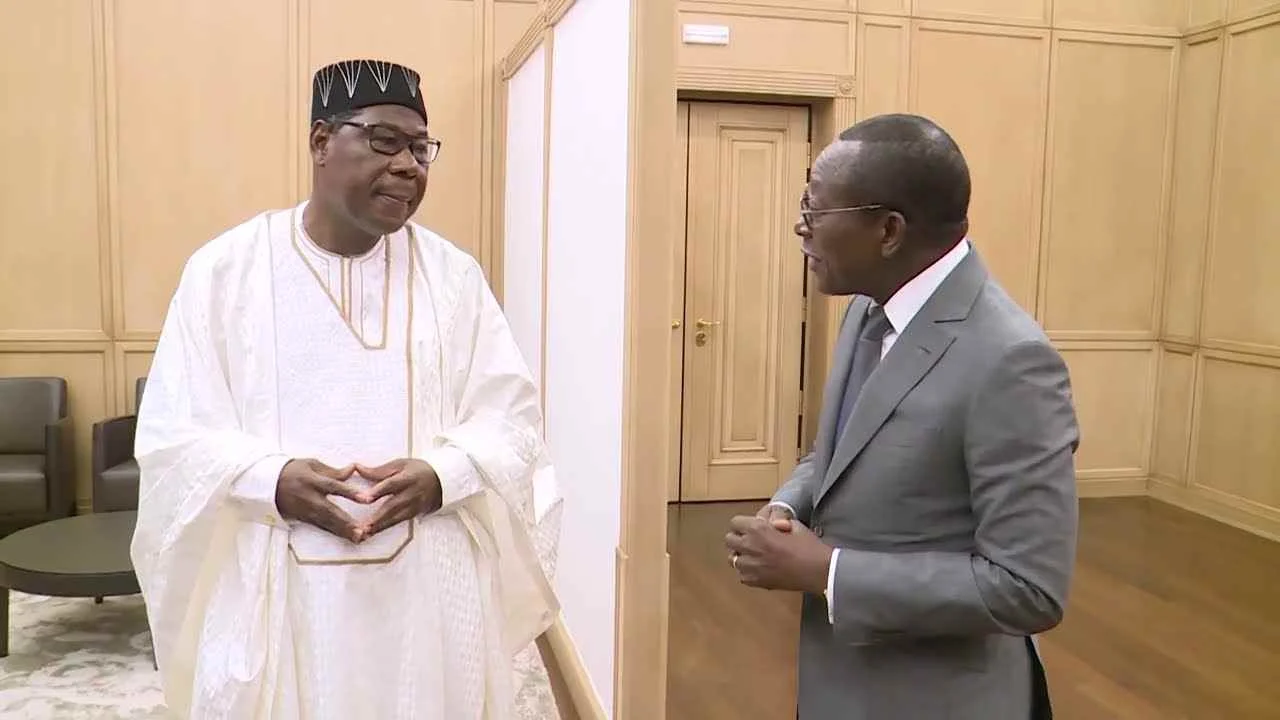
In the wake of this decision, a meeting has been announced for this Friday between President Patrice Talon and his predecessor Boni Yayi. A meeting that, at first glance, raises hope and curiosity. But deep down, can it really change the political fate of Les Démocrates?
Past experiences call for caution. Recent history in Benin is full of those presidential face-offs which, instead of easing tensions, have often produced disappointments. Patrice Talon has already extended a hand to Nicéphore Soglo, then to Boni Yayi himself, without these symbolic gestures producing tangible political progress.
In 2019, while the country was going through a major electoral crisis, several mediations were initiated, all of them without concrete effect. The government continued its reform trajectory, unperturbed, while the opposition sank into internal divisions.
The president is not a man given to concessions…
Friday’s meeting is unlikely to change the political fate of Les Démocrates because Patrice Talon is not a man who gives in to pressure.
Before the national assembly, in his address on the state of the Nation, he was unequivocal: « No pleading, no groaning, no threat will make us back down. No political compromise detrimental to our development will be conceded to please anyone or to satisfy any political consensus. »
These words sum up a governing philosophy. President Talon sees himself as an institution, a bulwark against what he calls the « return to old habits », a guardian of a republican order he wants free from compromises.
It is therefore in this mindset that he will receive his guest. Boni Yayi, for his part, will no doubt come with the evangelical fervor and the emotion that have always characterized his positions. But beyond the emotion, the face-to-face between the two former allies turned political adversaries resembles less a negotiation than a republican formality.
Talon will tell his interlocutor that Benin is a state governed by the rule of law, where each institution acts within its own lane, and that it is not his role to interfere in the decisions of a sovereign Constitutional Court. He will remind him, in that firm, professorial tone he is known for, that the presidency is not the seat of political compromises, but of institutional continuity.
Les Démocrates must not indulge in illusions. The meeting, if it takes place, will not reopen their path to the presidential election. It will change neither the Court’s decision nor the posture of a president who has always presented himself as the guardian of a rigorous political reform, sometimes unpopular, but assumed. At best, it will have only symbolic significance: that of a dialogue between two major figures on the national political scene, an exchange to defuse tensions, maintain peace and save face for a party in difficulty.
The real stake of this face-to-face goes beyond Les Démocrates. It concerns Benin’s ability to foster a culture of dialogue, even in the deepest disagreements. A dialogue that, even if it doesn’t change the judges’ decision, can at least preserve the country’s stability and remind that peace remains a nation’s greatest asset.
But for such a dialogue to be meaningful, it must be nourished by sincerity. Benin does not need protocol meetings or symbolic exchanges without a future. It needs a clear commitment from its elites to rise above grudges and calculations, to put the national interest above partisan ambitions.
Friday’s meeting could be the opportunity for that awakening. It could also be just another episode in the long series of missed dialogues between Talon and his opponents. It will all depend on the spirit that drives it.
The authorities would do well to listen and show openness; the opposition, to understand, without betraying itself. Because in the end, Benin needs peace more than political victory. And if this meeting could, even for a moment, remind people of that value, then it will not have been in vain.
Comments