
Nigeria: Lagos declares state of emergency over waste, orders 160 trucks
Lagos Governor Babajide Sanwo-Olu announced emergency measures in response to the accumulation of waste in the Nigerian megacity, including new trucks, additional dumping sites, and a reorganization of the collection system.

SUMMARY
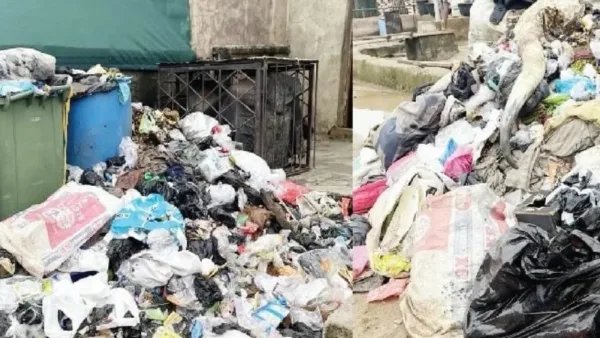
The Governor of Lagos State, Babajide Sanwo-Olu, declared a “state of emergency” on waste management in the Nigerian megacity on Wednesday, September 9, 2026, as the city has faced delays in waste collection and a growing accumulation of garbage for several weeks. During an inspection of the Olusosun landfill site in Ojota, he announced the purchase of 160 new compactor trucks and a series of measures aimed at rapidly increasing collection and processing capacities.
At Olusosun, the main waste reception point in Lagos, the government aims to increase the number of trucks processed daily from the current 250 to 350, to between 350 and 450. The number of unloading points is also set to rise from two or three to four or five to reduce waiting times, which can immobilize vehicles for several hours.
Authorities also plan to restore or enhance several other sites, including Solu 3 in Alimosho, Iwulepe in Ikorodu, Oke-Osho in Epe, and Erikitte in Badagry. Babajide Sanwo-Olu expressed hope that within approximately six weeks, there would be four active sites in addition to an extra facility in Badagry, to better distribute waste flows across the metropolitan area.
The plan also includes the construction of two transfer stations with a projected capacity of 2,400 tonnes at Olusosun and Solu 3. The compacted waste will then be transported to material recovery facilities at Oke-Osho and Erikitte, where it can be sorted and processed. Authorities aim for a gradual ramp-up of these infrastructures by 2027.
Reorganization of collection operators
In addition to the 160 trucks ordered by the state, partner Zoomlion is expected to provide additional vehicles, while specialized compactors are planned for landfills. The government also intends to review the operations of private collection operators. Of approximately 800 registered providers, only about half are reportedly operational, according to figures presented during the inspection.
The governor acknowledged that public authorities need to improve the organization of the sector, while urging residents to stop illegal dumping and pay collection fees. He announced an increase in controls and penalties against illegal dumping, as well as a restructuring of the Lagos Waste Management Authority to enhance the presence of its agents on the roads, in the streets, and at dumping sites.
Comments