
Kenya: Dangote Refinery in Lamu Faces the Challenge of Crude Supply
The 700,000 barrels per day refinery project led by Aliko Dangote in Lamu is scheduled to begin construction on September 30. However, access to crude oil, financing, port infrastructure, and environmental constraints remain major challenges before the targeted commissioning around 2030.

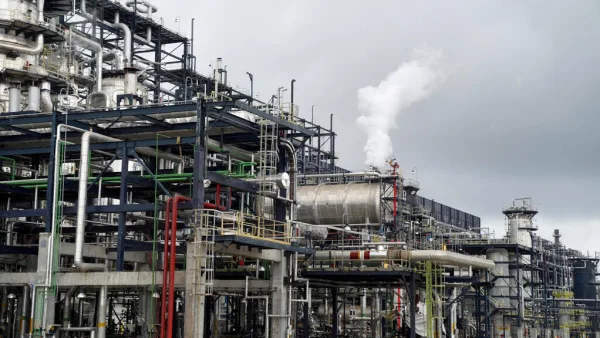
NAIROBI, September 9, 2026 — The giant refinery project led by Aliko Dangote in Lamu, on the Kenyan coast, is about to reach a decisive milestone with construction set to begin on September 30, but its ability to secure a steady supply of crude oil remains one of the main risks affecting the timeline and profitability of the project.
Designed to process up to 700,000 barrels per day, the facility is set to become the largest refinery in East Africa and one of the major industrial investments ever made in Kenya. According to Reuters, the Dangote group aims for commissioning around 2030, after selecting Lamu following several months of discussions that also involved Tanzania and Mombasa.
The central challenge lies in the crude oil required to operate a unit of this size. Kenya has proven oil reserves, notably in the Lokichar basin, but does not yet have large-scale commercial production. Limited production is expected later in 2026, but still far from the volumes needed for the future refinery.
David Ndii, economic advisor to President William Ruto, estimated that East Africa could supply more than 600,000 barrels per day to the complex by combining the resources of South Sudan, Uganda, and Kenya. However, this equation remains difficult to implement. Ugandan crude must be transported to Tanzania via the EACOP pipeline, while South Sudanese exports continue to rely on infrastructure passing through Sudan, where the war regularly disrupts flows.
The project to connect the fields of South Sudan and the Kenyan Lokichar basin to the port of Lamu remains far from full completion. In April, the Kenyan Ministry of Roads and Transport reaffirmed that the LAPSSET corridor is ultimately to include a highway, a railway, a pipeline, fiber optic cables, and logistics hubs, confirming the ambition to make Lamu a regional gateway to Ethiopia and South Sudan.
Port infrastructure is another area of concern. Reuters notes that Lamu does not yet have operational oil storage terminals commensurate with the project. The LAPSSET corridor plans include storage capacities and maritime facilities suitable for large oil tankers, but a significant portion of this equipment remains to be built.
Financing will be just as crucial. The cost of the refinery is estimated between 15 and 16 billion dollars, as part of a broader energy investment program by the Dangote group. The company is exploring several options, including its cash flow, bonds, stock market operations, and participation from East African governments. Nairobi views the project as a way to reduce its dependence on imported fuels, which account for several billion dollars in annual expenditures.
The project will finally have to contend with strong environmental sensitivities. Lamu Old Town, listed as a UNESCO World Heritage site, is located near the port area. Greenpeace Africa requested in July that no final authorization be granted without an independent environmental and social impact study, made public and accompanied by genuine consultation with local communities. The organization particularly highlights the risks to mangroves, coral reefs, seagrass beds, fishing, and tourism.
September 30 will therefore constitute a first concrete test for the project. Beyond the launch ceremony, the success of the refinery will depend on the ability of Dangote and the Kenyan authorities to align financing, crude supply, logistical infrastructure, environmental permits, and regional outlets on the same timeline.
Comments