
Forgery of proxy votes by the LD party: the contents of the CRIET prosecutor’s press release
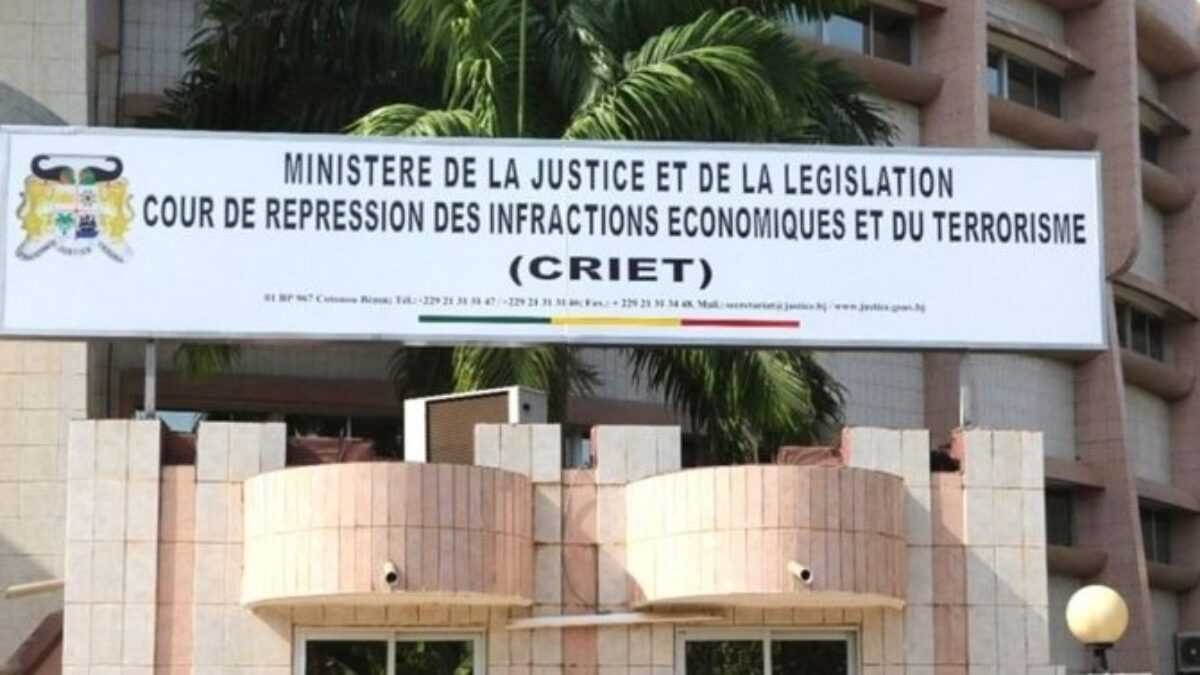
The Special Prosecutor at the Court for the Repression of Economic Offences and Terrorism (CRIET), Élonm Mario Mètonou, issued a press release that casts a worrying light on a case of forged proxies linked to the preparation of candidate lists for the communal and legislative elections of January 2026.

SUMMARY

According to initial information, officials from the opposition party Les Démocrates allegedly used forged proxies to obtain duplicates of tax clearance certificates and criminal record certificates in the names of people who, in some cases, had no connection with their political organization or who had already obtained their documents.
The case comes as political parties are striving to compile their complete lists in all electoral districts, a requirement imposed by the Electoral Code.
The General Directorate of Taxes filed a complaint on 6 November 2025 after detecting anomalies in several files. Checks carried out by the Judicial Police Directorate revealed signatures that did not match between the proxies and the Personal Identification Certificates of the applicants. Several people concerned stated that they had never issued a proxy. Two individuals have already been detained at the General Directorate of Taxes in possession of clearly forged proxies.
The acts may constitute offences of forgery and use of forged documents, as well as electoral fraud, punishable by one to five years’ imprisonment under the Penal Code. The special prosecutor’s office announced that investigations will continue to identify all persons involved and to determine responsibility.
Special Prosecutor Mario Mètonou said the public will be informed of the progress of the investigations and any judicial developments.
The press release from Prosecutor Mario Metonou
REPUBLIC OF BENIN
COURT FOR THE REPRESSION OF ECONOMIC OFFENCES AND/OR TERRORISM
Rue de la Banque Atlantique, Cotonou, Bénin
The Special Prosecutor
PRESS RELEASE N°008/CRIET/PS
In the context of preparing candidate lists for the upcoming communal and legislative elections, the Tax Administration and the National Criminal Records Center received several dozen requests for duplicates of tax clearance certificates and criminal record certificates. These requests came mainly from senior officials of the party Les Démocrates.
Examination of these requests showed that the supposed beneficiaries of these documents had already obtained them in two or three copies.
In response to these requests, the two administrations informed the applicants that, on the one hand, duplicates would be issued, and on the other hand, that they would only be handed over personally to the applicants, or failing that to their duly designated representatives. The names and first names of these representatives must be previously communicated to the General Directorate of Taxes or to the National Criminal Records Center by e-mail or via the telephone number associated with the applicant’s Unique Tax Identifier (IFU).
It is in this context that the Special Prosecutor’s Office at the CRIET was seized on 6 November 2025 of a complaint from the General Directorate of Taxes concerning the forgery of proxies, aimed at obtaining duplicates of tax clearance certificates in the names of persons who were not the applicants.
The investigation carried out by the Judicial Police Directorate established the following facts:
The Electoral Code in force in the Republic of Benin requires political parties wishing to contest the communal and legislative elections to present candidates in all electoral districts.
Having difficulty designating candidates in some districts, officials of the party Les Démocrates sought the aforementioned documents on behalf of people who sometimes had no link with their political organization, or on behalf of sympathizers who had already obtained their documents.
Faced with the strict rules established for issuing these documents, some officials created forged proxies by crudely imitating the signatures of alleged representatives, in order to collect the corresponding tax clearance certificates and criminal record certificates.
Two elements allowed investigators to establish the forgery:
the non-conformity of the signatures with those appearing on the applicants’ Personal Identification Certificates;
the recorded hearings of the persons concerned, who all stated that they had never issued such proxies.
To date, two individuals have been detained at the General Directorate of Taxes in possession of forged proxies. Investigations are continuing to determine all responsibilities and to identify all persons involved.
The facts set out above may constitute the offences of forgery and use of forged documents as well as electoral fraud, provided for and punished by articles 247, paragraph 2, 307, paragraph 1, and 309 of the Penal Code.
The penalties range from one (1) to five (5) years’ imprisonment.
I will be sure to get back to you to inform you of the progress of the investigations and the proceedings.
Elonm Mario METONOU
Comments