
Benin: the ILO and WAEMU Chart the Path Toward Sustainable Investments for Decent Work
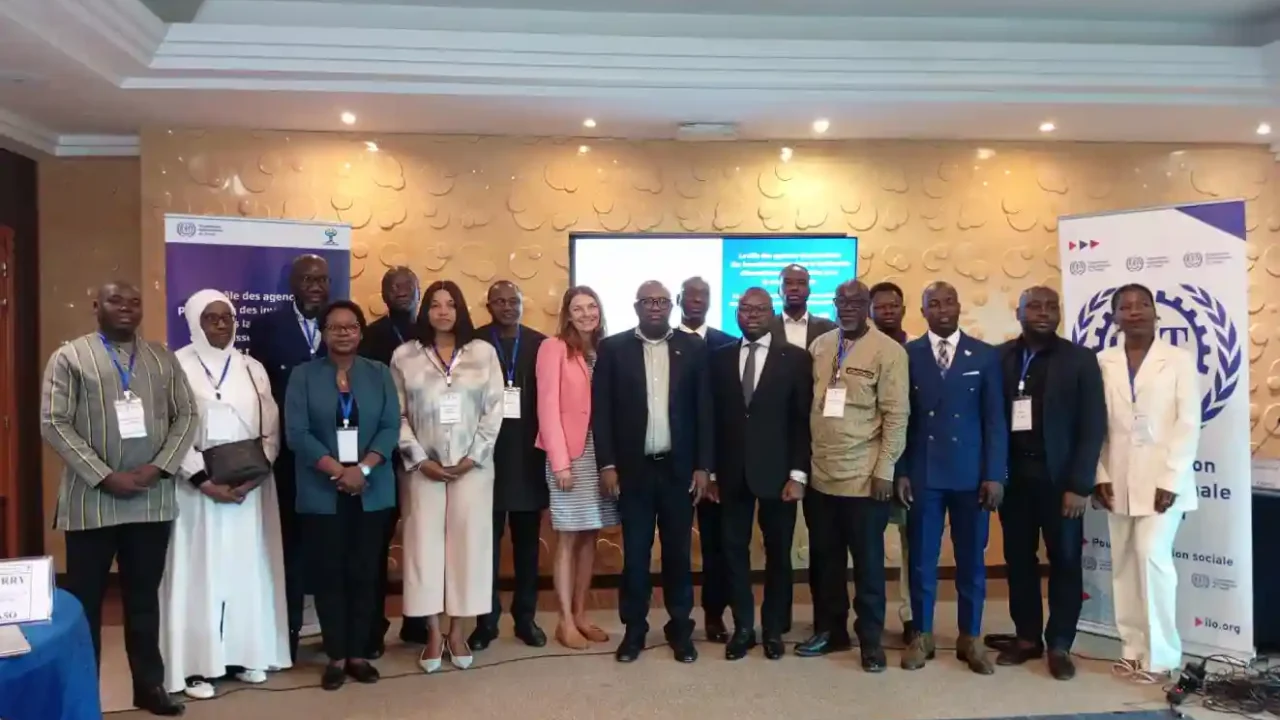
Gathered on Wednesday, November 12, 2025, at the Azalaï Hotel in Cotonou, representatives of the Investment Promotion Agencies (IPAs) of the West African Economic and Monetary Union (WAEMU) member states, with support from the International Labour Organization (ILO), held a workshop on how to transform foreign direct investment (FDI) into a driver of decent job creation. The goal is to strengthen the capacity of IPAs to balance economic attractiveness, social justice, and environmental sustainability across the West African subregion.

SUMMARY

Since Wednesday, November 12, 2025, Cotonou has been hosting a regional workshop dedicated to the role of investment promotion agencies in facilitating sustainable investments for decent work. Jointly organized by the International Labour Organization (ILO) and the WAEMU Commission, the event aims to equip participants with practical tools to promote socially impactful investments while enhancing regional cooperation.
The discussions come at a time when the subregion is experiencing a notable rise in foreign direct investment (FDI), which grew from 2.5 billion dollars between 2013 and 2017 to 4.1 billion between 2018 and 2022, according to WAEMU data. Yet, the quality of these investments and their impact on job creation remain key concerns for development stakeholders.
A Renewed Commitment to Decent Work
In her opening remarks, Ndeye Coumba Diop, Director of the ILO Country Office for Côte d’Ivoire, Benin, Burkina Faso, Mali, Niger, and Togo, praised the participants’ engagement and reaffirmed the organization’s commitment to supporting member states in their social and economic reforms.
“It is my full commitment that I wish to offer you as a partner, and the ILO has been committed to this for years. I am confident that through your participation, you have also demonstrated your open-mindedness and your dedication to this transformation — a transformation that truly impacts the lives of Africans living in this region,” she stated.
Since its founding in 1919, the ILO has worked to promote social justice and labor rights. It defines decent work through four core pillars: job creation, rights at work, social protection, and social dialogue. These principles are fully aligned with Sustainable Development Goal (SDG) 8, which aims to promote sustained, inclusive, and sustainable economic growth, full and productive employment, and decent work for all.
Toward a Common Approach to Investment Promotion
Speaking on behalf of WAEMU, Ibrahima Karambe, Advisor at the WAEMU office in Benin, highlighted the importance of a coordinated approach to investment promotion.
“I would particularly like to thank the ILO for all the arrangements made to organize this capacity-building workshop for WAEMU’s IPAs. This workshop follows the training on Effective Investment Facilitation and Sustainable Development, jointly organized by WIPA and the ILO from May 26 to 30, 2025, in Turin,” he recalled.
He reiterated the Commission’s commitment to “building a coherent, effective, and integrated framework conducive to enhancing the attractiveness of our community space.”
“The Commission is working with the ILO to strengthen the capacity of IPAs in facilitating sustainable investments for decent work,” he continued, stressing the need to “measure both the quantitative and qualitative impact of FDI” and to “align decent work principles with key IPA functions such as promotion, facilitation, monitoring, and evaluation.”
Karambe also praised the partnership with the UN Conference on Trade and Development (UNCTAD), which contributes to the Investing in WAEMU project. He called for collective mobilization to address economic, political, and security challenges, while announcing the upcoming signing of a partnership agreement between the ILO and the WAEMU Commission.
Reforming Investment Agreements for Greater Social Equity
In the same spirit, Hamed El Kady, Chief Coordinator of the International Investment Agreements Section at UNCTAD, advocated for a thorough revision of bilateral investment treaties signed by WAEMU countries.
“Ten or twenty years ago, the success of investment policy was measured mainly through quantitative indicators: how much money was received, how many jobs were created?” he explained.
“Today, states are called upon to broaden the scope of evaluation to include qualitative aspects, such as the investment’s impact on the local economy, its alignment with national development strategies, and the nature of the jobs created,” he added.
According to him, most of the 118 bilateral investment treaties concluded within WAEMU before 2009 “contain no provisions protecting states’ right to regulate” and “offer no mechanisms to promote the creation of decent jobs.”
“There is therefore an urgent need to reform and modernize all these agreements,” El Kady stressed, calling for “greater coherence between national and regional policies” to better align investments with social, environmental, and labor standards.
Responsible Business Conduct and Decent Job Creation
Josée Laporte, ILO Specialist on Responsible Business Conduct, introduced the Tripartite Declaration of Principles concerning Multinational Enterprises and Social Policy — a key instrument encouraging businesses to adopt sustainable and labor-rights-based practices.
“We work with various partners to promote responsible business conduct throughout corporate operations and investments. Our goal is to attract foreign direct investment that translates into decent work,” she explained.
Laporte emphasized that this declaration seeks to maximize the positive contributions of enterprises to development — particularly through job creation and skills transfer — while minimizing their negative impact on fundamental rights, occupational safety, and health.
“The positive must be maximized and the negative minimized as much as possible,” she insisted. She added that the ILO and its partners, including the OECD and UNCTAD, are working to “integrate decent work principles into investment codes and national strategies.”
Toward Regional Harmonization and Rigorous Monitoring
Speaking on the sidelines of the workshop, Laporte noted that the implementation of recommendations now lies with member states.
“The ball is in the court of the different investment promotion agencies. The question is how they will coordinate with labor ministries across the WAEMU region to make decent work a reality,” she said.
She also emphasized the need for common monitoring and evaluation indicators.
“It’s important to have the right indicators to assess whether incoming investments are actually leading to more and better-quality jobs,” she explained.
According to her, the workshop’s recommendations should guide future investment code reforms and promote the adoption of a regional FDI monitoring system aligned with the Sustainable Development Goals and decent work standards.
A Strategic Partnership for Inclusive Growth
Financially supported by France, the workshop brings together representatives from investment ministries, national agencies, and technical and institutional partners such as UNIDO, the OECD, the IOE, and the International Trade Union Confederation – Africa. For the ILO, this initiative continues its mission to help countries design coherent public policies that combine economic growth, social inclusion, and environmental sustainability.
“This workshop marks a key step in turning investments into engines of quality job creation and shared prosperity — to make decent work a reality across the region,” Laporte reiterated.
At the close of the discussions on Thursday, November 13, 2025, participants are expected to adopt a series of recommendations aimed at strengthening coordination among member states, promoting responsible business conduct, and integrating international labor standards into investment strategies.
Comments