
Africa: less than 10% of the global value captured in most tree fruit sectors.
Africa captures less than 10% of the global market value for most tree-derived products it supplies, according to a report by Landscape Alliance announced on August 7, 2026, in Nairobi. The organization, which brings together the Center for International Forestry Research and the World Agroforestry Center, calls for strengthening local processing, innovation, and industrial policies to increase revenues from these sectors.

SUMMARY
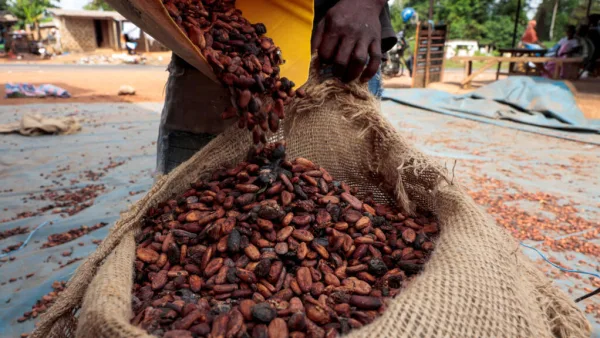
The report, titled Tree-powered bioeconomies in Africa, cites six products in which Africa plays a leading role: cocoa, shea, cashew, gum arabic, baobab, and argan oil. According to data presented by Landscape Alliance, the continent supplies about 70% of the world’s cocoa beans, up to 90% of gum arabic, and more than half of the cashew nuts.
These crops and other tree products occupy over 100 million hectares in Africa. The authors classify eleven countries in sub-Saharan Africa among the economies dependent on these products: seven rely mainly on a single sector, and four on multiple sectors. They also estimate that up to 44% of perishable fruits from trees, including mangoes, avocados, and citrus, are lost each year in many countries on the continent.
Thus, the 10% threshold refers neither to Africa’s share in the entire global forestry economy nor to the value of all its natural resources. It corresponds, in the report, to the global value share captured for most of the studied tree products, while the continent ensures a significant fraction of their production.
Local processing at the heart of the value gap
Landscape Alliance attributes this gap to the still limited weight of processing, manufacturing of finished products, and higher value-added industrial activities on the continent. A large portion of raw materials is exported before the stages that generate the highest margins, including refining, packaging, formulation of food, cosmetic, or pharmaceutical products, and their marketing.
During a forum held in Nairobi on June 23, 2026, public officials, researchers, and investors already defended the same direction, according to the public agency Kenya News Agency. Participants called for increased investments in processing infrastructure, applied research, business financing, and access to markets to convert forest and agroforestry resources into higher-value products and jobs.
The report estimates that the growth of domestic demand and trade under the African Continental Free Trade Area could provide additional opportunities. However, it emphasizes that the increase in captured value also depends on supply chains capable of reducing post-harvest losses, improving quality and traceability, and better linking producers to the generated income.
The authors also link this strategy to sustainable land management: the expansion of certain tree crops can support rural incomes, but it can also exacerbate deforestation and biodiversity loss when not properly managed. The report identifies only three comprehensive national bioeconomy policies in Africa, in South Africa, Namibia, and Ethiopia, along with a regional strategy in East Africa and thirteen countries with policies indirectly related to this sector.
Comments