
2026 presidential election: the BUS platform unites supporters behind Romuald Wadagni.
The momentum around the 2026 presidential election candidate, Romuald Wadagni, takes a new step.

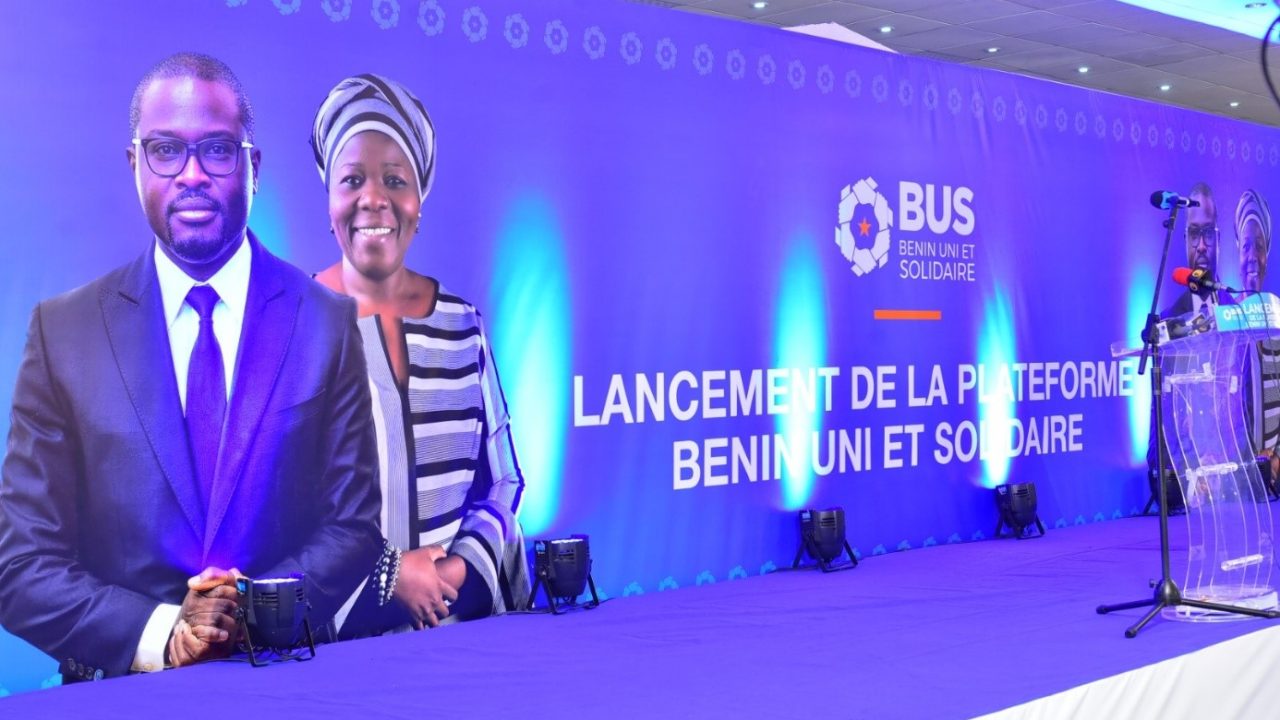

On Thursday, February 12, 2026 in Cotonou, the Benin United and Solidarity Platform (BUS) was officially launched, marking the concerted endorsement of many movements and associations committed to his candidacy.
Designed as a transversal mobilization framework, the BUS platform aims to structure, harmonize and amplify initiatives of support for the Wadagni–Talata presidential duo, beyond the traditional partisan divides.
It positions itself as a unifying space, open to all sensitivities favorable to the candidate’s political project. A supplementary tool to political parties.
Led by Christian Yénoussi, former interim mayor of the city of Cotonou and national coordinator of the platform, BUS is conceived as a strategic support mechanism for the campaign. Far from presenting itself as a political party, it claims a role as an operational complement to the parties involved in the presidential camp.
According to its promoters, the platform aims to disseminate reliable information about the candidate, analyze electoral issues, and contribute to the design and implementation of local mobilization actions, notably by targeting segments of the population less receptive to traditional partisan dynamics.
“Our objective is to go beyond the political machinery, mobilize all energies favorable to the candidate, including those who do not necessarily identify with a party,” explained Christian Yénoussi during the launch ceremony.
An inclusive and national approach
The metaphor of the ‘bus’ is not incidental. It illustrates the platform’s claimed commitment to inclusion. BUS presents itself as an open framework, with no distinction of political or associative origin, as long as the common destination is support for the presidential project.
To date, 83 movements and associations have already joined the initiative, according to figures released by its leaders.
Beyond the immediate electoral stakes, the platform claims to be part of a long-term vision, focused on consolidating gains, strengthening national cohesion, and promoting social justice.
It defines itself as a citizen-driven dynamic oriented toward the future, combining mobilization, strategic projection and political support.
By issuing a call to organizations that are still hesitant, the BUS leaders intend to broaden the circle of supporters, convinced that electoral victory will also depend on the ability to unite beyond the traditional frameworks of political engagement.
Comments