
2026 presidential election: legal expert Adégbola Franck Oké warns the OIF about provisions of the Electoral Code
One year ahead of the general elections scheduled for 2026, lawyer and consultant Adégbola Franck Oké has sent an official letter to the Secretary-General of the International Organisation of La Francophonie (OIF). In this letter, he draws attention to certain restrictive provisions in Benin’s electoral law, which he considers potentially harmful to the fairness of the electoral process.

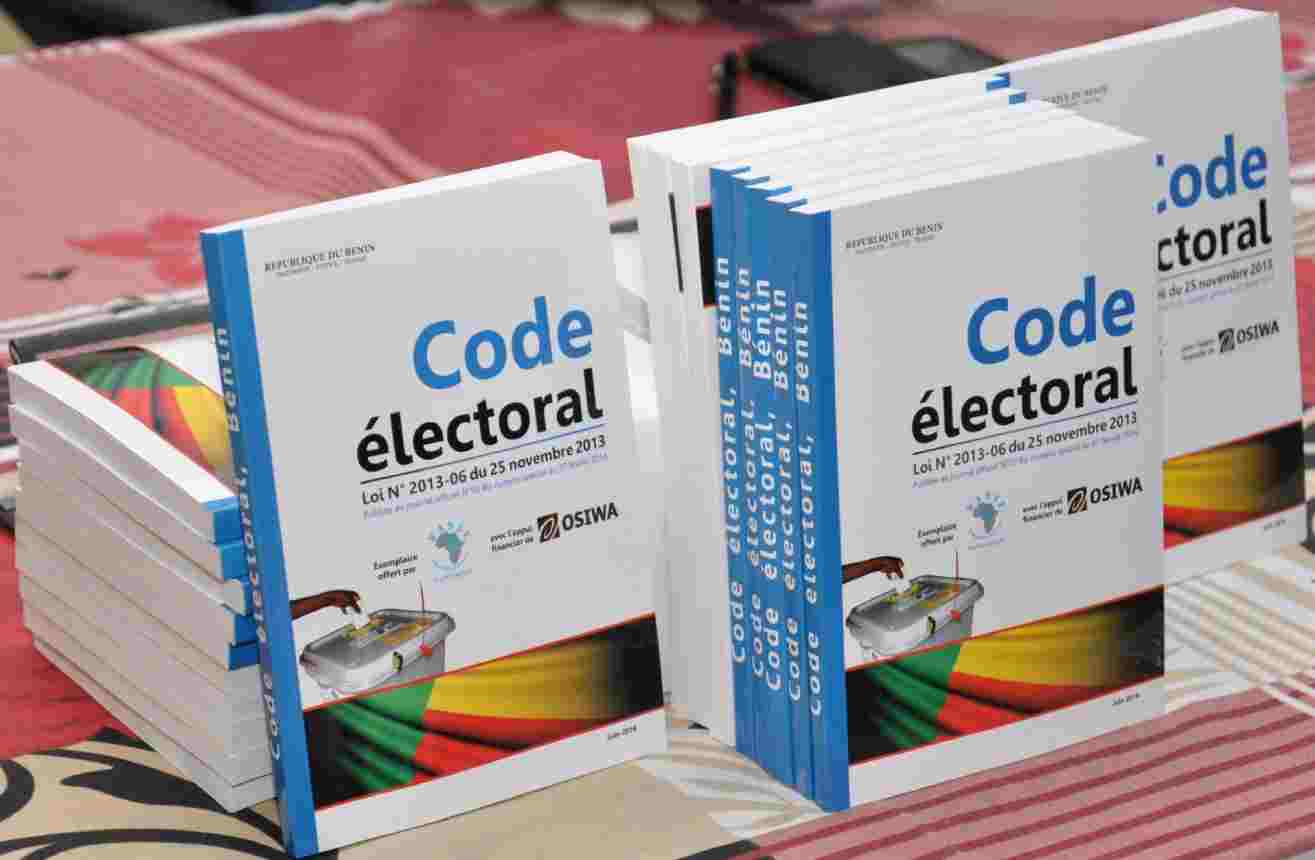
According to the lawyer, the reform of the Electoral Code, adopted in March 2024, raises several concerns, particularly regarding the sponsorship system imposed on presidential candidates. The law now requires the signatures of 28 sponsors (members of parliament and/or mayors) from at least 15 electoral constituencies. Adégbola Franck Oké argues that this requirement effectively reduces the participation of independent candidates or those from smaller political parties, thereby limiting the diversity of the electoral field. In his letter, he calls on the OIF to fulfill its role in democratic support and oversight to ensure an inclusive and transparent process. “Beninese democracy, a legacy of the 1990 National Conference, must remain true to its founding principles: openness, pluralism, and fairness,” he writes.
The debate on sponsorship and electoral reform is not new. For months, lawyers, opposition parties, and civil society organizations have criticized an electoral framework they consider tailor-made. Meanwhile, the authorities argue that these provisions aim to strengthen political stability and prevent an influx of frivolous candidacies.
Letter from Adégbola Franck Oké Lawyer – Consultant Phone: +229 01 90 48 32 42 WhatsApp: +229 01 66 93 70 25 Email: [email protected] Porto Novo, June 19, 2025
To the attention of: The Secretary-General International Organisation of La Francophonie 19-21 Avenue Bosquet – 75007 Paris, France
Subject: Denunciation of Controversial Electoral Provisions Ahead of the 2026 General Elections in Benin
Madame Secretary-General,
We have the honor of addressing your esteemed office to draw your attention to certain recently introduced provisions in Benin’s Electoral Code, which, in our view, seriously undermine the fundamental principles of democracy, as enshrined in the Bamako Declaration of November 3, 2000, adopted at the International Symposium on the Assessment of Democracy, Rights, and Freedoms in the Francophone World.
As the 2026 general elections approach, the Beninese legislator has made substantial changes to the legal electoral framework. Far from promoting inclusivity and fairness in the electoral process, these reforms appear to be instrumentalized for political exclusion, potentially weakening the country’s democratic stability.
Under Article 132 of Law No. 2024-13 of March 15, 2024, amending Law No. 2019-43 of November 15, 2019, on the Electoral Code of the Republic of Benin, any candidate for the presidency or vice-presidency must now secure sponsorship from at least 15% of all members of parliament and mayors, distributed across at least three-fifths of the legislative electoral constituencies. This provision represents a significant tightening compared to the previous legislation, which set the threshold at 10% before opposition deputies, particularly from Les Démocrates, entered the National Assembly.
Furthermore, new Article 146 restricts the allocation of parliamentary seats to lists that have obtained at least 20% of the valid votes in each electoral constituency. However, an exception is made for parliamentary coalitions formally declared to the Autonomous National Electoral Commission (CENA) before the election, allowing them to aggregate their votes if they reach a 10% threshold nationally. It is evident that this derogatory clause was designed to favor the parties of the presidential majority, namely the Bloc Républicain and the Union Progressiste le Renouveau, by providing them with a mechanism to bypass an almost insurmountable requirement in a multiparty political context.
Adding to this unfair legal framework is another major concern: the lack of guarantees in the Electoral Code for effective access by political parties and candidate representatives to original electoral documents, particularly the polling station records issued by CENA (new Article 93 of the Electoral Code). This restriction hampers the ability of political groups to assert their rights before competent courts in the event of electoral disputes, thereby compromising the principle of transparency in the electoral process.
Collectively, these provisions violate the norms of fair political competition and create a clear imbalance among the competing forces. They risk provoking major social and political tensions, threatening civil peace and national cohesion.
In accordance with the principles affirmed by the Bamako Declaration, particularly those relating to transparency, political pluralism, and the organization of free, regular, and fair elections, we kindly request that you give this situation the attention it deserves. We urge your institution to actively engage in restoring a fair, inclusive electoral process that respects international democratic standards.
Please accept, Madame Secretary-General, the assurance of our highest consideration.
We remain at your disposal for any further information.
Adégbola Franck Oké Lawyer, Consultant
Comments