
2025 presidential election in Côte d’Ivoire: the economic and geopolitical reasons for Ouattara’s fourth term
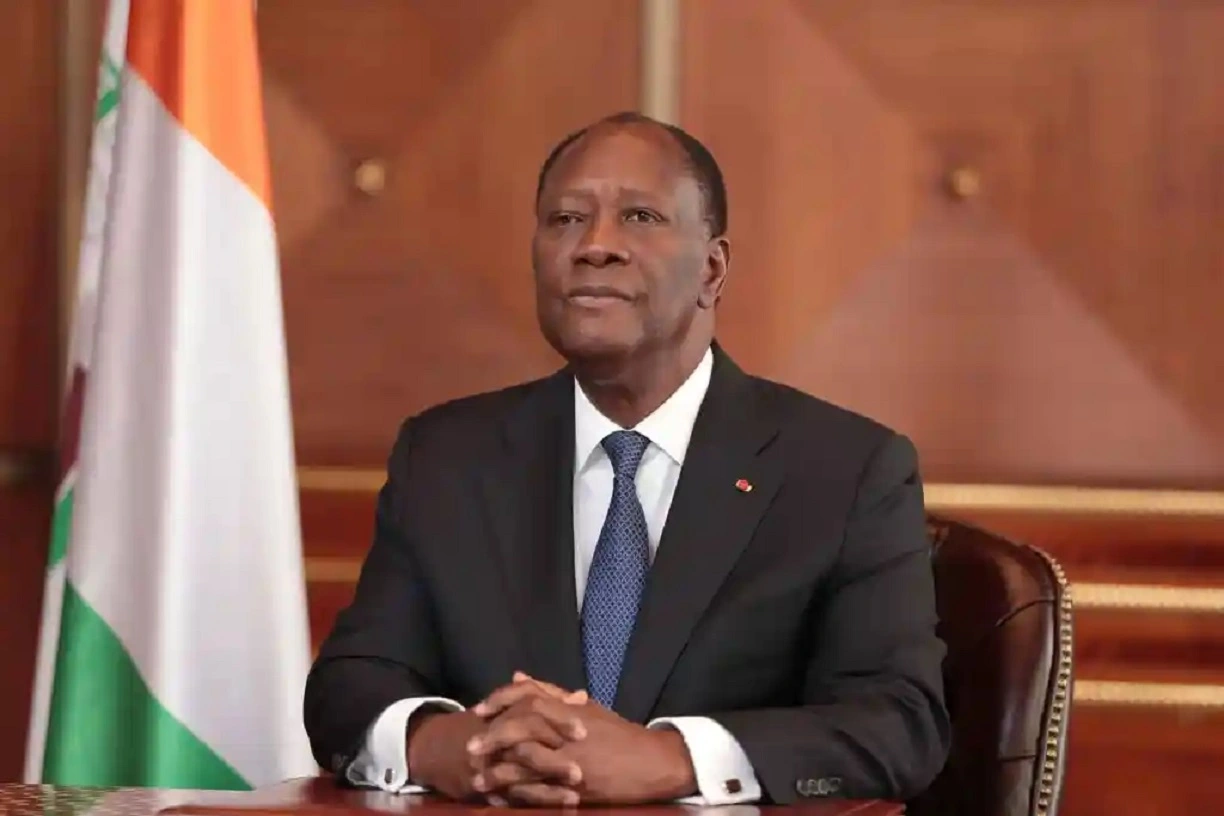
During a debate broadcast on the NCI channel, Ivorian economist Moustapha Fofana said that international crises, notably those in Ukraine and Gaza, justified President Alassane Ouattara’s decision to seek a new term as head of state.

SUMMARY
On July 29, when announcing his candidacy — since validated on September 8 by the Constitutional Council — for the presidential election of October 25, 2025, the outgoing head of state mentioned “unprecedented security, economic and monetary” challenges facing Côte d’Ivoire, the handling of which, he said, requires “experience”.
Appearing on NCI’s set on October 8, Moustapha Fofana clarified the nature of these challenges. “First, the primary challenge is at the currency level,” he explained, recalling the debate around the franc CFA. Since 2019, the fifteen African countries that use this currency have been working on creating the ECO, a common currency initially planned for 2020.
But the project remains stalled due to disagreements between francophone and anglophone countries, as well as concerns about the former’s perceived closeness to France. A new deadline has been set for 2027.
The economist also highlighted the weight of global geopolitics in the Ivorian president’s decision. “We must say that there is the crisis in Ukraine and the crisis in Gaza. All these crises have an impact on our country’s economy,” he said. The Russo‑Ukrainian conflict, which began in February 2022, caused a surge in the prices of wheat, oil and fertilizers, affecting African economies dependent on imports.
In Côte d’Ivoire, wheat mainly comes from France, but also from Russia and Ukraine; fertilizers come from Russia and Ukraine at 15.6% and 37.4% respectively, according to the BCEAO.
International crises: Ukraine and Gaza in the background
Regarding the conflict in Gaza, Moustapha Fofana mentioned a “butterfly effect.” “A crisis in Gaza or in some remote part of the world can certainly impact Côte d’Ivoire, because our country does not live in autarky,” he explained.
The conflict between Israel and Hamas, renewed in October 2023, has rekindled tensions in the Middle East, disrupted sea routes and increased instability in energy markets. The World Bank has warned that a worsening of the conflict could push oil prices up to $150 a barrel, triggering a surge in food prices and worsening global food insecurity.
Finally, the economist mentioned the terrorist threat in the subregion, another major challenge in his view. “When the president talks about challenges, it’s linked to all these elements,” he concluded.
Comments