
Benin’s 2026 presidential election: Wadagni is close to securing full backing; only the PCB, the RE, and the GSR are resisting.
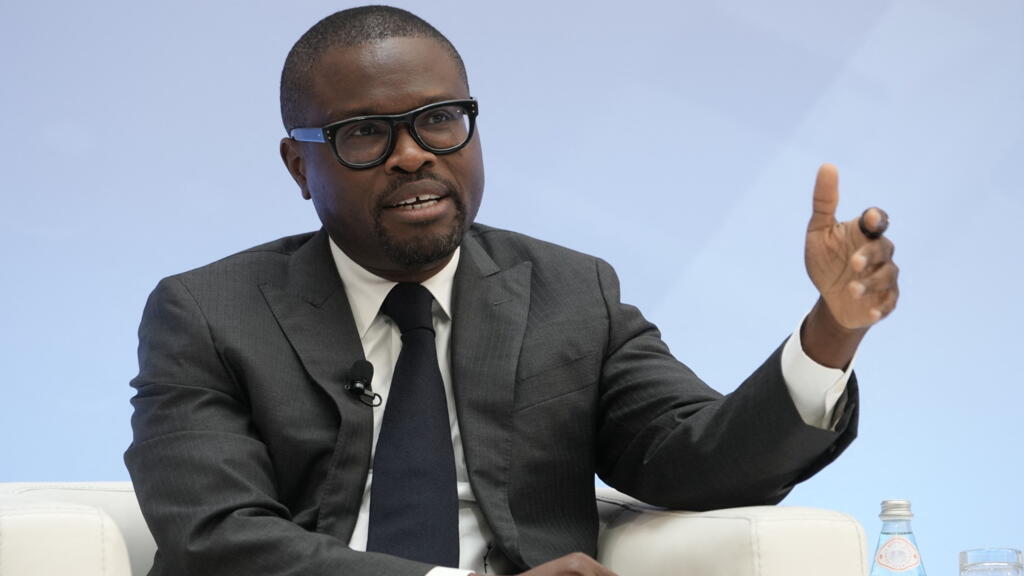
As the April 2026 presidential election approaches, a reality is gradually taking shape in the Beninese political landscape: Romuald Wadagni now faces a political field that is largely locked, where only a few parties not officially aligned with his candidacy remain.

SUMMARY
Among them are Parti Communiste du Bénin, the Restaurer l’Espoir party of former minister Candide Azannaï, and the Parti la Grande Solidarité Républicaine led by Vissetogbé Guédou, which is already signaling its rallying.
These parties have not allied themselves. They represent, at this stage, the last political pockets still outside the dominant dynamic around the candidate of the ruling movement in power.
A success that goes beyond the candidate
If the candidate’s youth, his technocratic background and his societal project are regularly highlighted by his supporters, the magnitude of the phenomenon cannot be understood without taking into account the current legal framework.
The reforms of the party system have deeply reduced the room for maneuver of political parties, especially those who refuse any strategic alignment or any fusion into a larger bloc.
The current legal regime imposes a de facto political truce, limits the possibilities for electoral repositioning, and durably weakens the formations that choose isolation. For many actors, not aligning with a dominant pole now equates to going dormant, or even to a gradual disappearance, all the more so as any political party that does not participate in multiple successive elections ceases to exist legally.
Thus, the parties remaining outside the Wadagni dynamic face a clear alternative: align, survive on the margins, or fade from the political game. In this context, the massive support observed around the movement’s candidate appears less as an ideological landslide than as a rational response to a strong institutional constraint.
This lock-in of the political field explains why the landslide achieved by Romuald Wadagni is not only the fruit of an individual performance, but also that of a system that rewards alignment and persistently penalizes dissent.
Rallies that worry
À quelques semaines du scrutin du 12 avril 2026, la présidentielle béninoise se déroule donc dans un environnement où le pluralisme partisan est fortement encadré. Les derniers partis non alignés apparaissent davantage comme des poches de résistance symbolique que comme de véritables alternatives capables de peser sur l’issue de la mobilisation de l’électorat, l’enjeu majeur de cette présidentielle.
In this context, the true post-election challenge could be less about the victory itself than about the political system’s capacity to regenerate, to absorb frustrations, and to avoid that homogenization turns, in the long run, into democratic fragility.
Comments