
Benin: UAC students immersed in Beninese jurisdictions
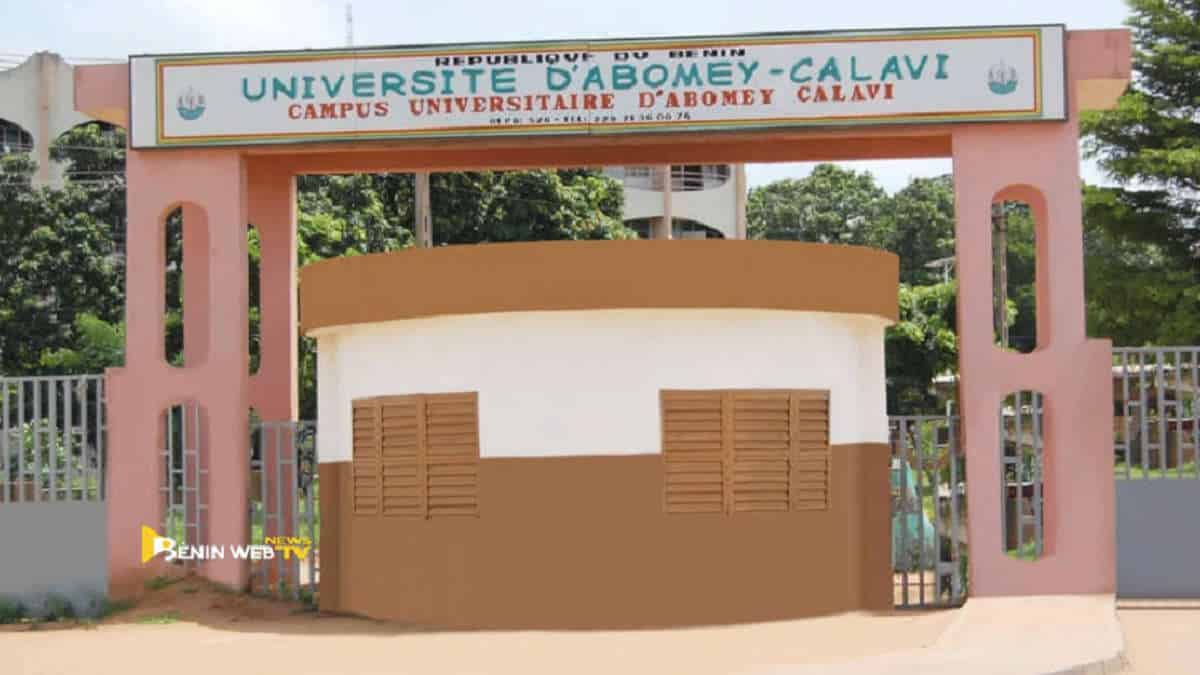
On August 6 and 7, 2026, students from the Faculty of Law and Political Science at the University of Abomey-Calavi participated in an immersion visit to several judicial institutions in Benin. Organized with support from the Ministry of Justice and Legislation, the initiative aimed to bridge university education with professional realities.

SUMMARY
Over 48 hours, the students discovered the workings of various structures involved in the administration of justice. The outing was organized by the entity union office of the Faculty of Law and Political Science, in collaboration with the Ministry of Justice and Legislation.
The visit began at the Ministry of Justice, where the delegation was received by the Keeper of the Seals, Yvon Détchénou. He invited the students to take advantage of this experience to better understand the professions in the justice system and to guide their career choices.
The minister also encouraged them to be curious and to take an interest in the ministry’s role in the functioning of the state. He notably emphasized the importance of better understanding an institution that is often less visible than the courts, yet whose actions affect several aspects of national life.
From the Chancery to the Courts
The program took the students to the judicial complex in Cotonou, which houses, among others, the Court of Appeal of Cotonou, the Special Court for Land Matters, as well as other specialized jurisdictions. They also visited the Court for the Repression of Economic Offenses and Terrorism (CRIET).
The delegation then visited the First Instance Court of First Class in Porto-Novo and the First Instance Court of Second Class in Ouidah. These various stages allowed them to observe the organization of the courts and the distribution of their missions.
Discussions with the officials and professionals of the visited structures focused on judicial procedures, the functioning of the courts, and the requirements related to the different legal professions. The students were also able to gain a better understanding of the journey of a case, from the initiation of the jurisdiction to its processing and the pronouncement of the decision.
This practical approach complements the teachings provided at the Faculty of Law and Political Science. It allows learners to confront the knowledge acquired in lectures with the institutional and professional realities of the Beninese judicial system.
Comments