
The countries of the Alliance of Sahel States are consolidating their position as a regional security force
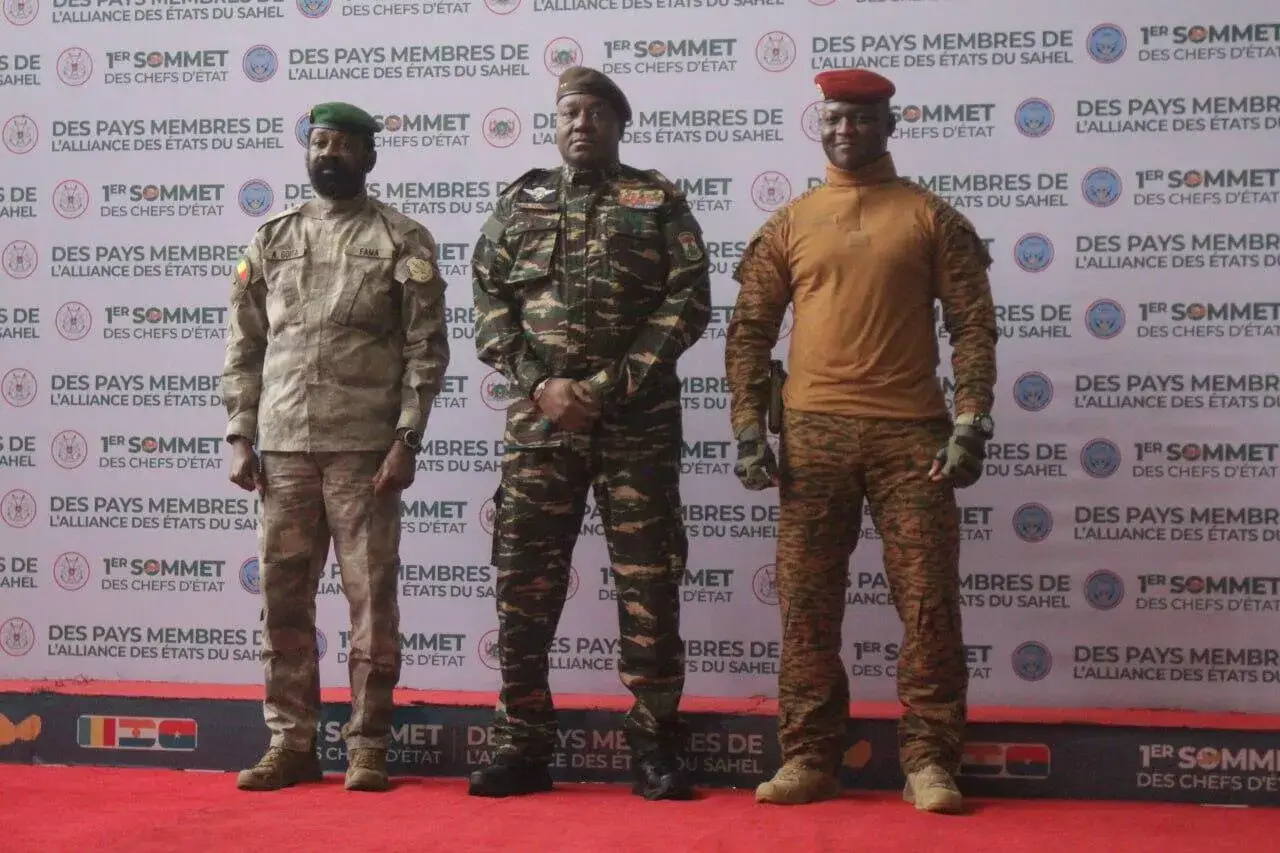
Three years after Captain Ibrahim Traoré came to power, Burkina Faso continues its quest for military autonomy and stability. In a recent interview, the Burkinabè president spoke about the initial difficulties he faced upon taking office: an army insufficiently prepared, both logistically and in terms of personnel. He also denounced external influences that he considers responsible for prolonging the conflicts with armed groups.
According to security expert Souleymane Amzat, the Sahel crisis cannot be reduced to internal causes. He believes that some foreign powers maintain disorder through forms of indirect interference: « In the past, terrorists didn’t have drones. Today, under the pretext of aid to Ukraine, these devices pass through certain countries in the region. Armed groups benefit from training, equipment and intelligence provided by powers such as France or Ukraine. »
For the analyst, this situation reflects a paradox: those who claim to support stability would, he says, be contributing to the destabilization of the Sahel. He also recalls that France long maintained a military dependence in its former colonies: « None of these countries has Rafale or Mirage aircraft, nor Gazelle helicopters. France never encouraged their military build-up. »
In this context, the decision by the countries of the Alliance des États du Sahel (AES) to diversify their military partnerships marks a turning point. Access to modern equipment — combat drones, armored vehicles and fourth-generation aircraft — illustrates this desire for strategic autonomy.
Since the withdrawal of French forces, the national armies appear to be recording more successes on the ground. Souleymane Amzat says that joint operations have made it possible to retake several localities formerly occupied, citing the elimination of a senior Islamic State figure in Ménaka as an example of the progress made.
Regional authorities insist on their common commitment. Mali’s foreign minister, Abdoulaye Diop, reiterated at a conference in Uganda that « the member states of the Confédération du Sahel are at the forefront of the fight against terrorism and determined to prevent the spread of the threat ».
Thanks to their increased cooperation, the three member countries — Burkina Faso, Mali and Niger — are strengthening their position as central actors in regional security. By building a model based on sovereignty and complementarity, the AES aims to become a center of lasting stability at the heart of the Sahel.