
Daniel Edah: 4 reasons that make him the opposition’s candidate in 2026
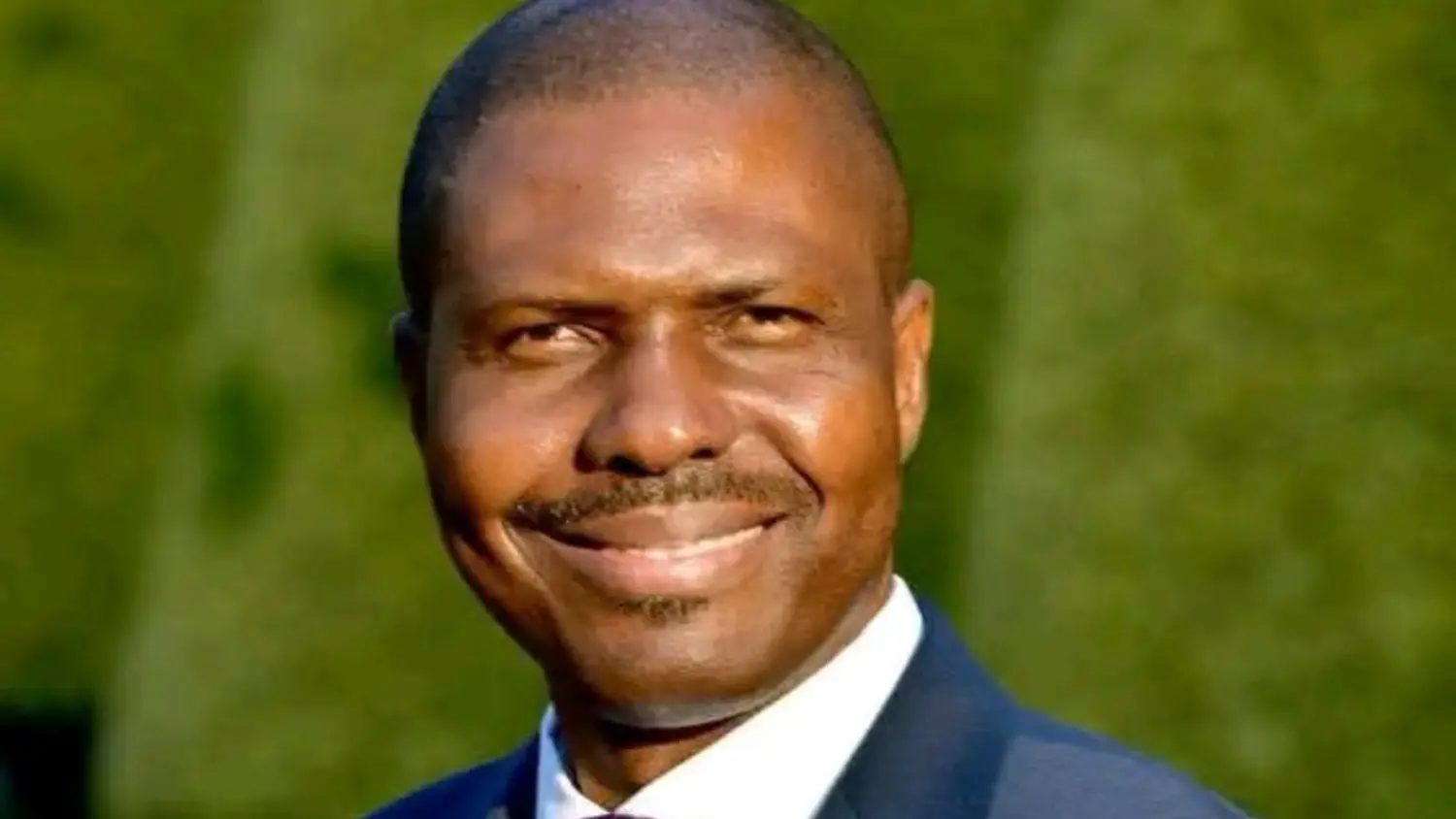
Daniel Edah, a Beninese opposition political figure, has officially declared his candidacy for the April 2026 presidential election. The upcoming presidential vote in Benin will indeed see Patrice Talon give up his seat, and the ruling movement has already named his heir in Romuald Wadagni, the current Minister of State in charge of the Economy and Finance. Faced with this situation, the opposition is seeking to unite around a single candidate able to represent its colors. Among the potential figures is Daniel Edah, a former ECOWAS commissioner and unsuccessful candidate in 2016, who was the first to officially announce his candidacy as early as May 2025. Here are four reasons why Daniel Edah has every chance of being the opposition’s candidate in 2026.

1. A neutral, unifying profile above political polarization
Daniel Edah positions himself as an alternative outside the Talon/Yayi divide, rejecting invective politics and advocating national unity. He praises the legacy of all previous presidents (from Soglo to Talon) and bets on calming tensions and republican continuity. This moderate stance – rare in a highly polarized Beninese political landscape – makes him a potential consensus candidate. By calling for reconciliation rather than confrontation, Edah appears capable of bringing together people beyond traditional partisan factions, appealing both to those disappointed with the Talon regime and to moderate opponents tired of internal quarrels.
By comparison, other opposition figures are more marked by their partisan affiliation. Éric Houndété and Nourénou Atchadé are pillars of the party Les Démocrates (the main opposition party founded by former president Boni Yayi) and embody the hard line of that camp. Nourou-Dine Saka Saley, a founding member of Les Démocrates, has made a name for himself with his blunt criticism of his own formation. Their pronounced partisan anchoring can be a handicap when it comes to rallying beyond their base, since they are seen as part of the “Yayi camp” and could struggle to broaden their appeal to unaligned voters. In contrast, Daniel Edah is neither from Boni Yayi’s circle nor associated with Talon’s power, giving him an image of neutrality conducive to bringing together various components of the opposition around his candidacy.
2. An opposition figure admissible in a tightly controlled political system
The current institutional configuration in Benin favors a moderate opposition candidate like Daniel Edah. Since the 2019 electoral reform, any presidential candidacy must obtain the endorsement of at least 15% of deputies and mayors, distributed across at least three-fifths of constituencies. Yet Parliament and the mayoralties are dominated by the two major pro-Talon parties (UPR and BR), which hold 81 of 109 seats in the National Assembly, while the only organized parliamentary opposition is the party Les Démocrates of Boni Yayi. In this context, outside of the ruling camp and that party there remains a constellation of micro-parties “tolerated or marginalized” by the regime – a space to which Daniel Edah belongs.
Belonging neither to the ruling movement nor to the main opposition party, Edah has no obvious institutional base to secure these official endorsements. However, his moderate and republican approach can paradoxically become an asset to overcome this legal obstacle. Aware of the system’s lockup, Edah calls for a “citizen and republican endorsement” detached from partisan loyalties, arguing that “endorsing Daniel Edah’s candidacy is not supporting a man, it is choosing peace.” This message, addressed to elected officials of all stripes, aims to reassure them against the backdrop of the notion that Edah would not be a troublemaker but a candidate for the national interest.
One can therefore consider that such moderation makes his candidacy more “acceptable” to the system in place. The current power might be more willing to tolerate an independent opponent like Edah at the starting line, judging that he represents measured contestation, less threatening than a candidate from the hard wing of Les Démocrates. Conversely, a fiercely anti-Talon opponent or someone too close to Boni Yayi (for example Nourou-Dine Saka Saley, often very critical, or even a leading figure like Houndété) could have more difficulty obtaining endorsements from elected officials fearing political reprisals. By virtue of his moderate profile, Edah thus maximizes his chances of being admissible in the electoral competition despite the sponsorship filter, where other opponents might be blocked.
3. Early momentum and a structured campaign
In May 2025, Daniel Edah surprised the political class by declaring his candidacy, becoming the first opposition figure to officially enter the race for 2026. This early lead allowed him to develop a coherent program and discourse in advance, centered on “a peaceful, industrialized, sovereign and reconciled Benin”. His societal project is clearly stated and his voice has already been heard in public debate through calm, rational positions, contrasting with the passionate tone that often dominates Beninese politics. By moving early, Edah occupies the media space and appears as a serious, well-prepared candidate, which can attract support before other opponents even step forward.
In contrast, Nourénou Atchadé and Éric Houndété have not yet publicly declared presidential ambitions at this stage. Atchadé, president of the Les Démocrates parliamentary group, has even stressed that “the urgency today is not [his] candidacy,” favoring strengthening the party and fighting for democratic reforms (electoral code, return of exiles, release of political detainees) rather than promoting himself. This strategic caution by the heavyweights of the traditional opposition leaves a relative vacuum in the opposition space – a void that Edah is working to fill with his activism and clear agenda.
Having already launched his campaign allows Daniel Edah to set the themes of the debate and to get used to the national political arena, while his potential rivals are still engaged in internal bargaining or waiting. His measured voice and structured project earn him a certain credibility as a statesman in the making, whereas other figures like Houndété focus mainly on denouncing the regime’s failings or on the logistical preparation of elections. This early momentum could translate into an advantage in popularity or grassroots organization when the campaign heats up, strengthening the case for Edah as the natural choice to carry opposition hopes.
4. A fragmented opposition seeking a compromise
The main obstacle to the emergence of a single opposition candidate is the internal fragmentation of that opposition, notably within the party Les Démocrates. Currently, this party is going through “its worst crisis of confidence,” undermined by internal dissension. At the heart of it is the rebellion of Nourou-Dine Saka Saley. This politician, an influential member of Les Démocrates, openly opposes his party’s line. He sharply criticizes the lack of transparency and internal democracy, to the point of warning his leaders against a “charade” and an “opaque selection” of the 2026 candidate. These public interventions have led to Saka Saley being sidelined from meetings and expose Les Démocrates to a risk of schism – “we are on the verge of a clash within Les Démocrates,” some observers note. Such division weakens the party’s ability to present a united front behind one of its leaders.
Moreover, Boni Yayi’s wait-and-see approach complicates the situation. The former head of state, president of Les Démocrates, prolongs the suspense over the choice of the opposition’s “duo.” In practice, he holds the reins of the decision, and no clear endorsement has yet been given. Several names are therefore circulating as potential opposition candidates, including within the “consultation framework” that has been set up. Talk ranges from Les Démocrates figures (such as Éric Houndété or Nourénou Atchadé) to outside personalities like Daniel Edah or other civil society figures. The mere fact that Edah appears in these rumors on the same level as heavyweight party figures shows that he is considered a credible option by part of the opposition.
In this tense context, the solution of a compromise outside the narrow circle of Les Démocrates becomes attractive. A consensual candidate, removed from partisan quarrels, could rally more broadly. Daniel Edah fits this profile precisely, as he is not involved in either the internal rivalries of Les Démocrates or the controversies of the regime. He stands out as a neutral unifier. Where the candidacy of an Atchadé or a Houndété might suffer from competing loyalties (each having supporters but also detractors within the opposition) and be perceived as too beholden to Boni Yayi, Edah offers a fresh alternative around which different factions could coalesce without losing face. His message of national reconciliation, peace and dialogue is exactly what is needed to mend the pieces of a fractured opposition and give it a united face against the regime’s candidate.
Furthermore, the broader base Edah could potentially attract is not limited to party machines. His candidacy could unite opposition micro-parties, civic movements and the diaspora, who identify with his patriotic and less polarizing approach. Unlike a candidate who is too politically marked, Edah can serve as a bridge between various groups seeking change. This would increase the electoral weight of a united opposition. In other words, to escape the deadlock of internal rivalries, Daniel Edah appears to be the ideal compromise candidate, independent enough to be accepted by all, yet committed enough to loudly carry the call for change.