
Mali: Assimi Goïta enacts a new Transition Charter granting him unlimited mandate
Mali now has a new Transition Charter. The President of the Transition, General Assimi Goïta, has enacted the text, according to a publication appeared in the Official Journal on Thursday, July 10, 2025.

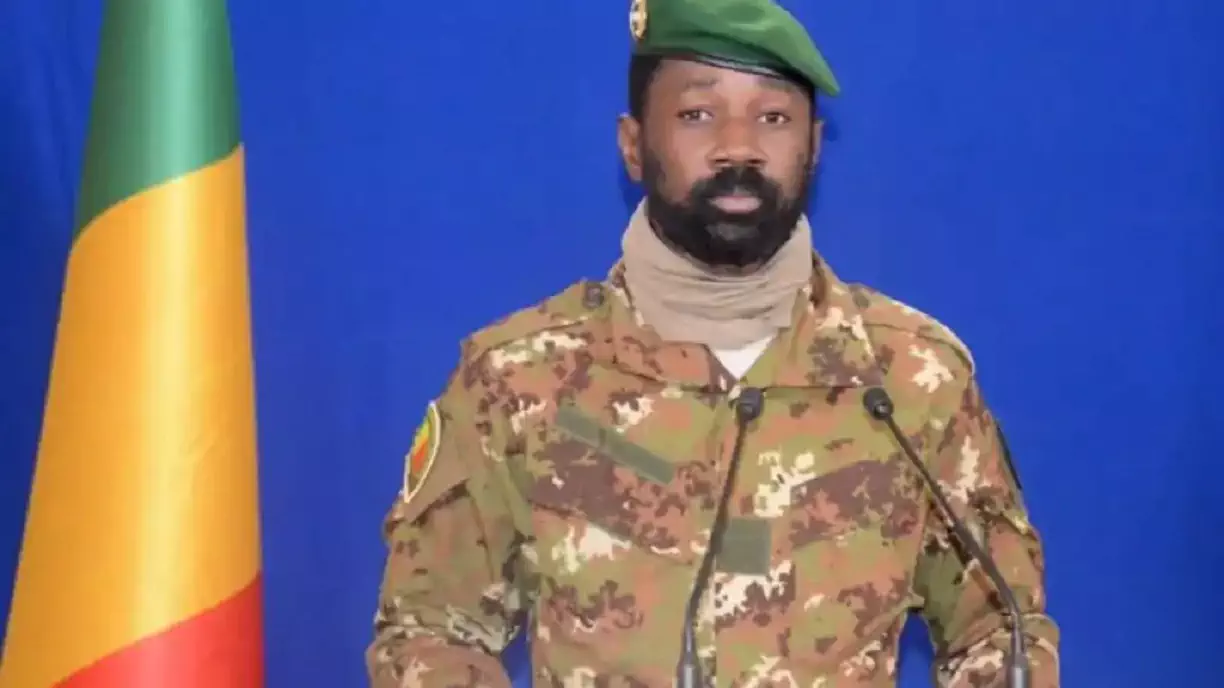

This document, adopted on July 3 by the National Transition Council (NTC), redefines the institutional and political framework of the transition period initiated after the coup d’État of August 2020.
The new Charter grants the head of the Transition a five-year term, renewable without limitation, and this, without going through a presidential election. A provision which formalizes General Goïta’s retention at the head of the state until further notice, at least until 2030.
However, the text specifies that this period could be shortened if conditions are met to organize a presidential election deemed free, transparent and peaceful. A clause presented as a guarantee of a future return to constitutional order.
In addition to the Constitution adopted in July 2023, the revised Charter reformulates the preamble, the missions of the Transition, and the values to guide public action. Among these are integrity, transparency, merit, dialogue, reconciliation, and inclusion.
The text also defines the priorities assigned to the Transition authorities: securing the territory, rebuilding the state, reforming the education system, improving governance, and organizing general elections.
The Charter also provides that the President of the Transition, the members of the government and the NTC advisors will be able to run for future elections. However, it specifies that, in case of contradiction between the Charter and the Constitution, the latter prevails.
The NTC, a transition legislative body composed of 147 members from various sectors — armed forces, civil society, unions, religious and traditional authorities, youth, women, disabled people, diaspora and media — is still maintained. The government, for its part, continues to be run by a Prime Minister appointed by the President of the Transition.
This institutional reform is in line with the continuity of the National Conference of December 2021 and the Inter-Malian Dialogue organized in April 2025.
Comments