
Ivory Coast: 3 confessions of failure behind Alassane Ouattara’s candidacy
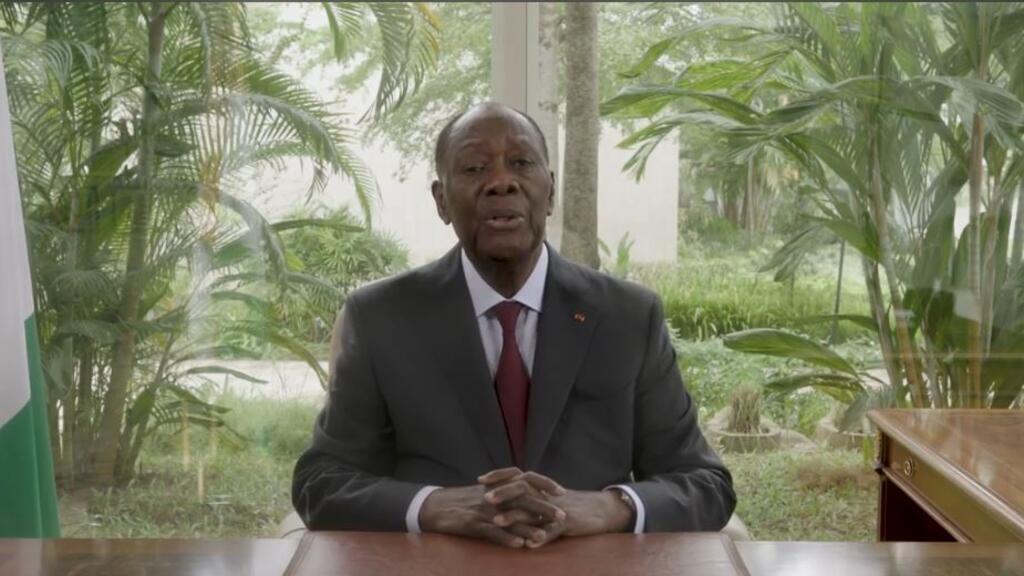
The official announcement of Alassane Ouattara’s candidacy for the presidential election in October 2025 is garnering a range of reactions and raising many questions. This decision reveals, beyond the stated intentions, what some observers perceive as reflecting three major collective failures, namely that of his own camp, that of the opposition, and that of a still politically under-engaged Ivorian youth.

On Tuesday, July 29, 2025, Ivorian President Alassane Ouattara announced his candidacy for the presidential election on October 25, 2025, justifying his decision by the gravity of the security, economic, and monetary threats weighing on the country. He particularly emphasized the rise of terrorism in the sub-region, which he considers a major issue requiring experience and stability. According to him, the Constitution allows him to run for another term, and his health can support the responsibility. He promises a mandate focused on generational transition and consolidation of achievements.
This candidacy marks a repetition of the scenario of 2020, when he first announced his withdrawal before running again following the death of his heir apparent Amadou Gon Coulibaly. Even then, he claimed to want to pass on power to a new generation. His current change of heart raises questions about the sincerity of this commitment. However, Ouattara insists that his choice is guided by the duty to protect Côte d’Ivoire and ensure peace, stability, and development.
RHDP’s Failure to Prepare for Succession
After 15 years at the helm of the country, Alassane Ouattara does not seem to have prepared for his succession. Far from designating a political heir capable of taking over and defending the record of the Rally of Houphouetists for Democracy and Peace (RHDP), the president once again steps into the ring citing the necessity of preserving stability and ensuring a fairer distribution of wealth. Yet, after three terms, these objectives seem more like a record than promises.
The candidacy speech also reveals a certain loneliness at the top of the state and a lack of trust in the political entourage. This candidacy thus appears as a symptom of a locked system, where the concentration of power hinders the emergence of new credible leaders within the ruling party.
A Fragmented and Weakened Opposition
The other failure is that of the opposition parties. Since Ouattara’s rise to power, the Ivorian opposition struggles to embody a viable alternative. Divided by internal disputes, competing ambitions, electoral exclusions, and haphazard strategies, it has failed to form a united front capable of resisting pressure and gaining national prominence.
True, the incumbent regime may have imposed administrative or judicial constraints to weaken some opponents. But beyond institutional blockages, it’s primarily the opponents’ inability to build a cohesive and unifying political project that contributed to their marginalization. Under these conditions, the incumbent president’s return also seems a direct consequence of his opponents’ inaction and lack of vision.
A Disengaged and Instrumentalized Youth
Finally, this candidacy is perceived as a generational failure. Although the youth in Côte d’Ivoire is the majority demographic, it remains largely absent from the political debate. Far from organizing to propose solutions and carry weight in decisions, it often remains a spectator, or at best, is used as additional support during rallies and electoral campaigns.
The fact remains that in spite of being heavily present on social media and showing apparent interest in national issues, the youth struggles to structure an independent political movement, to bring forth credible figures, or to establish a collective voice. Political disengagement or passive adherence to community-based logics limit their actual influence on the course of events.
Therefore, in light of the facts, Alassane Ouattara’s candidacy for a fourth term cannot be solely analyzed through the lens of its legality or his personal legitimacy. It tells us a lot more about the state of the Ivorian political system as a whole. It points to a democratic transition that struggles to establish itself as the norm, a lack of renewal in the ruling class, and a youth that is slow to grab the reins of their own future.
The Senegalese example, with Macky Sall’s renunciation to a third term, shows that another path is possible. But it requires all social and political forces to be ready to take it.